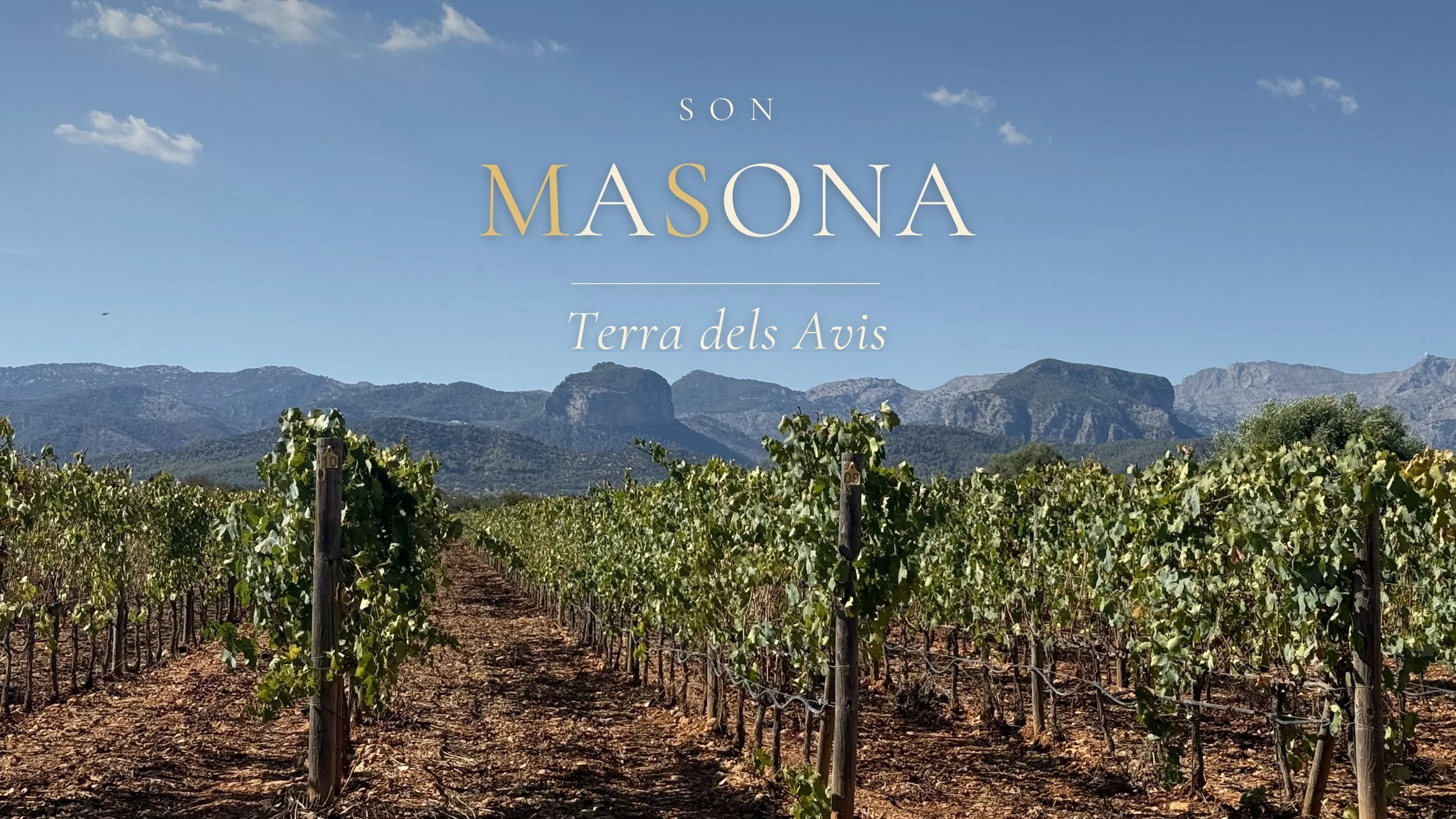
Viñas, olivos y tiempo.
Vines, olives and time.
Biniagual · Mallorca
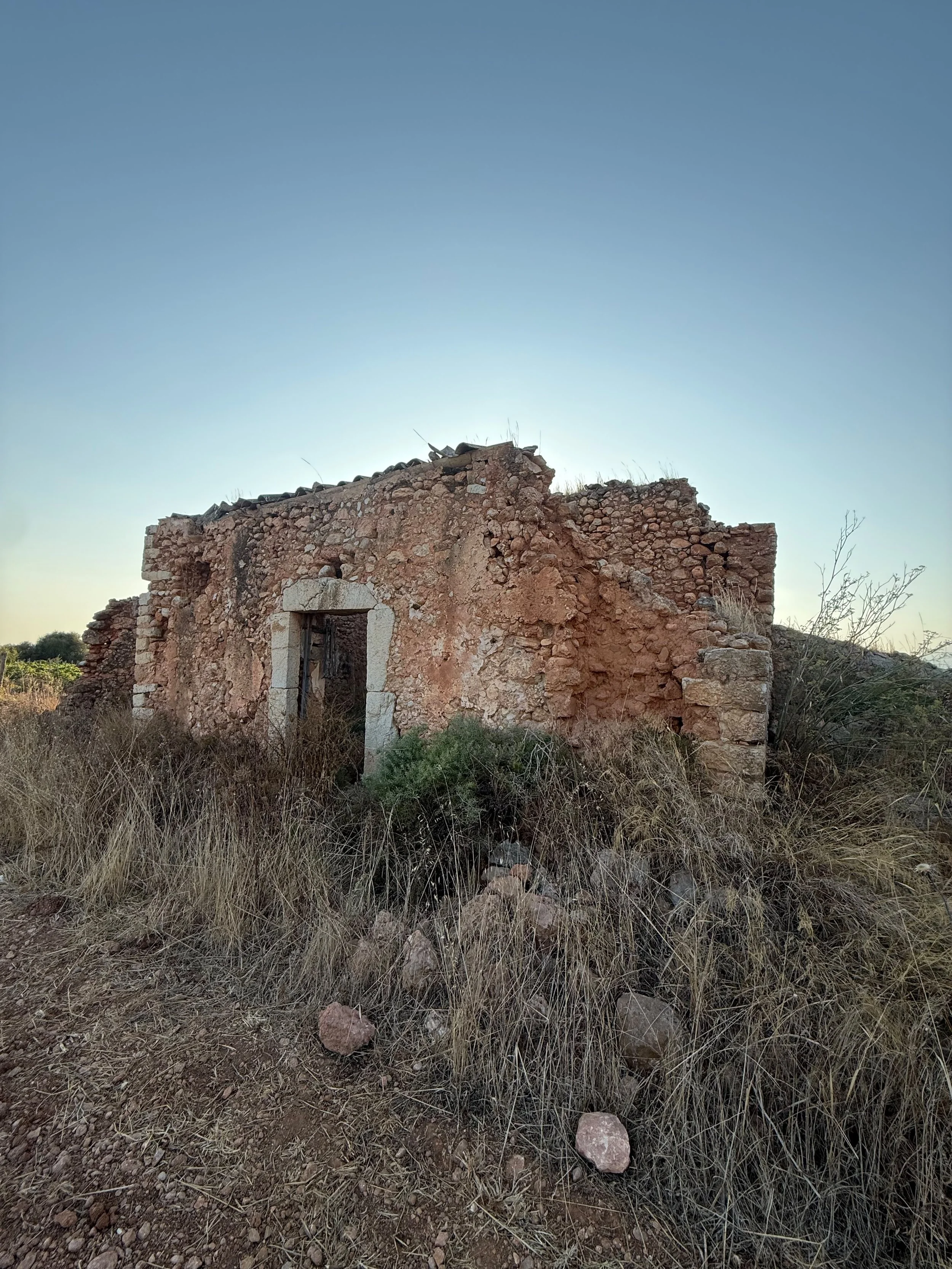
La finca
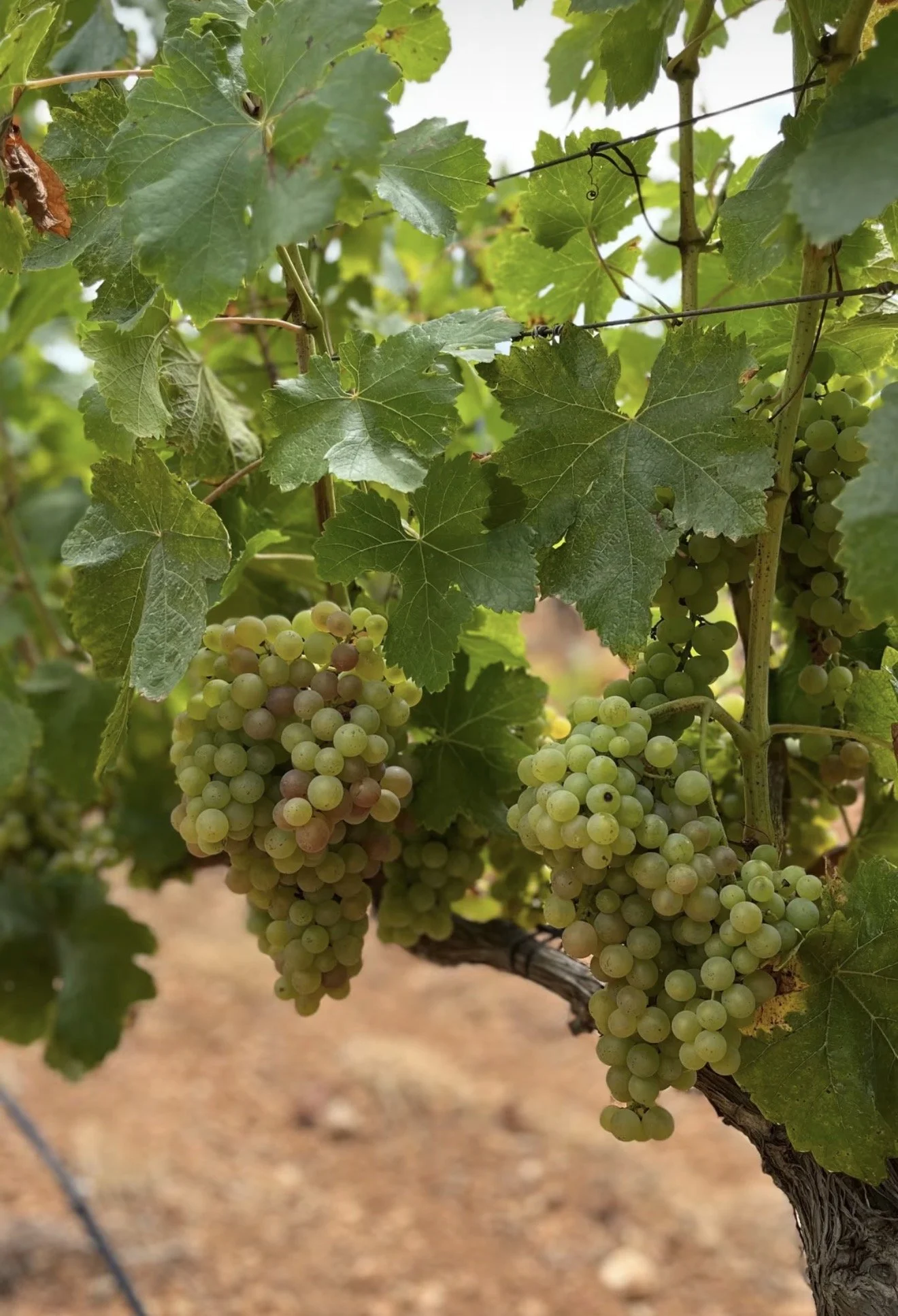
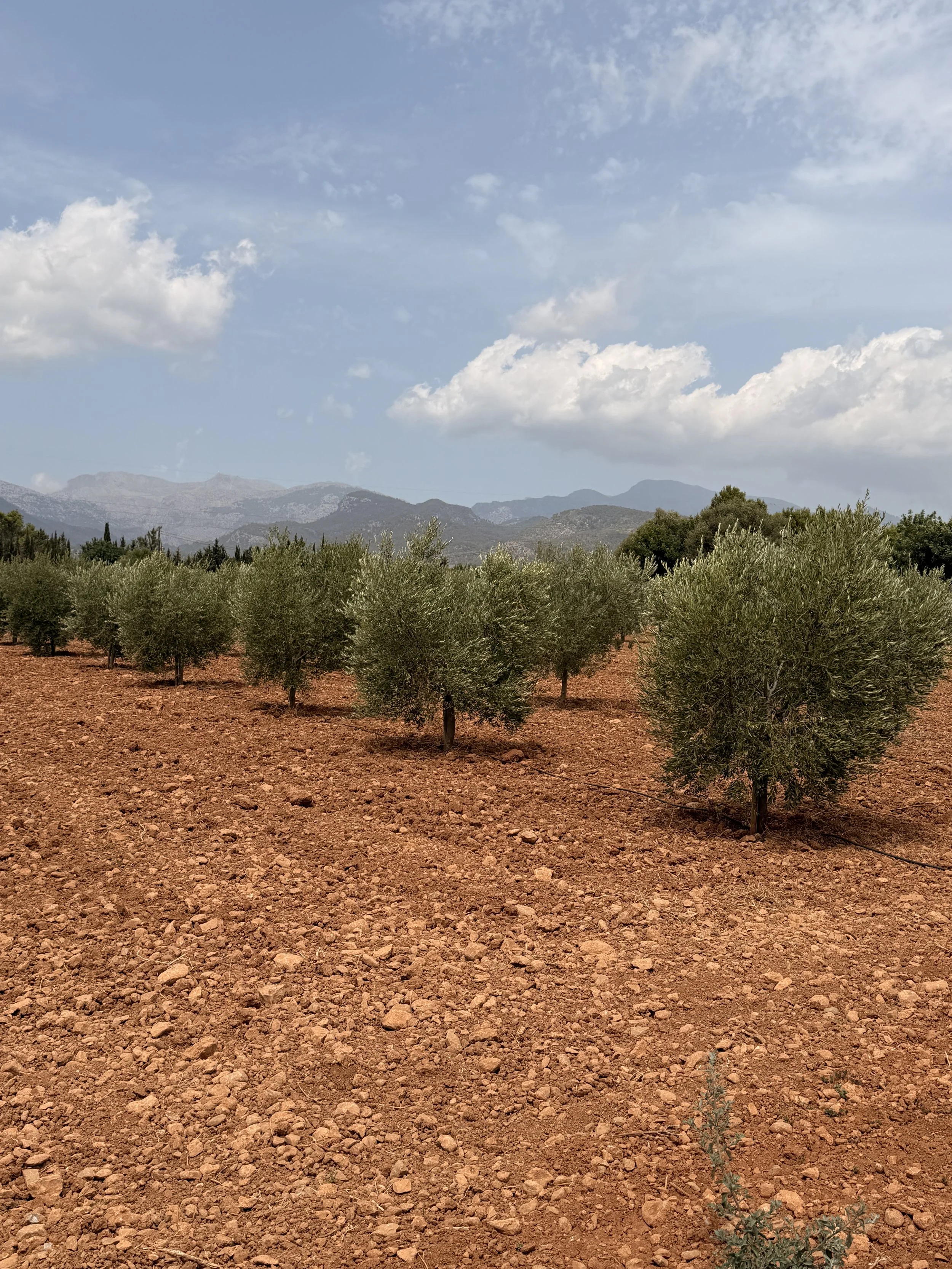
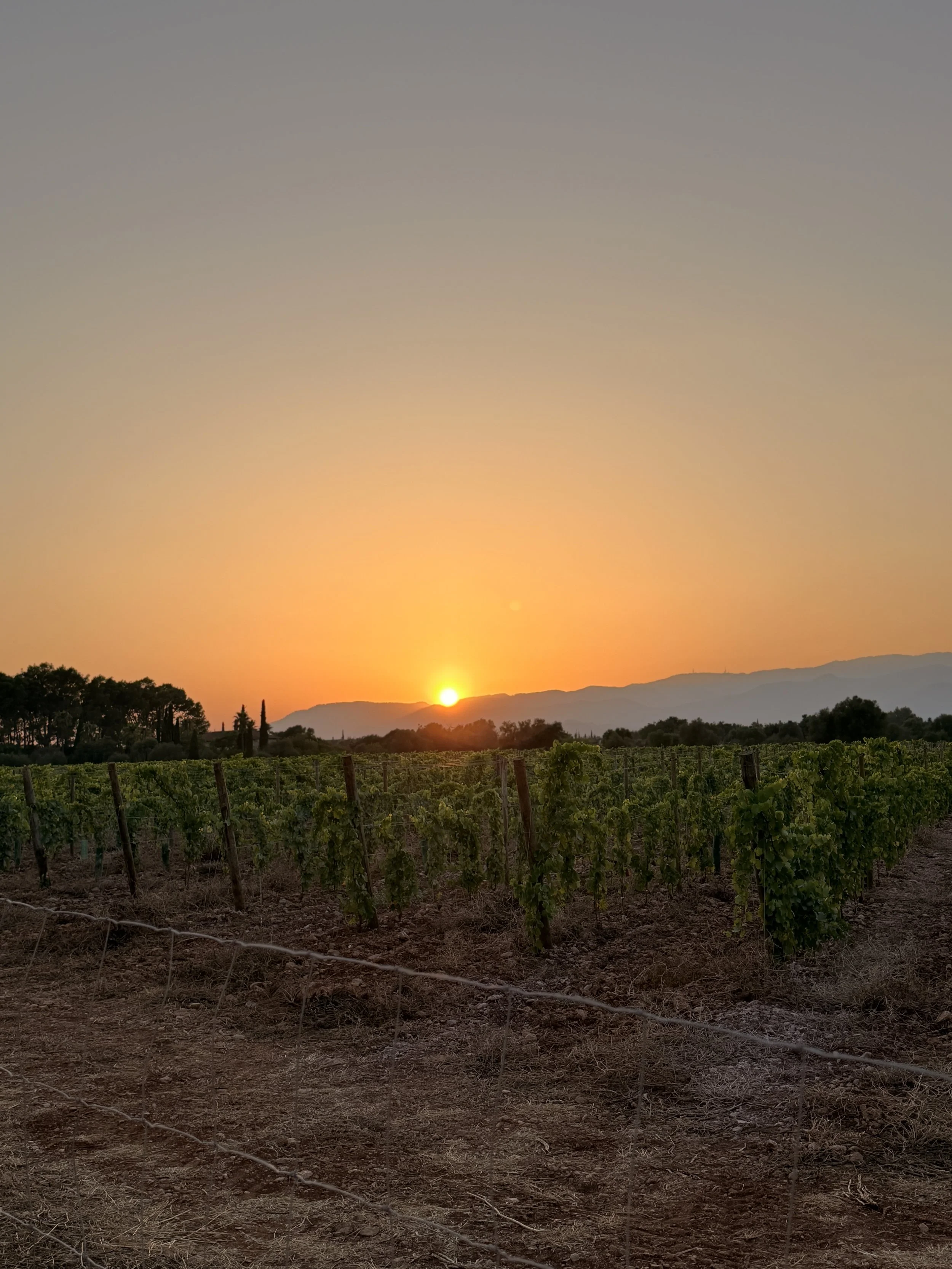
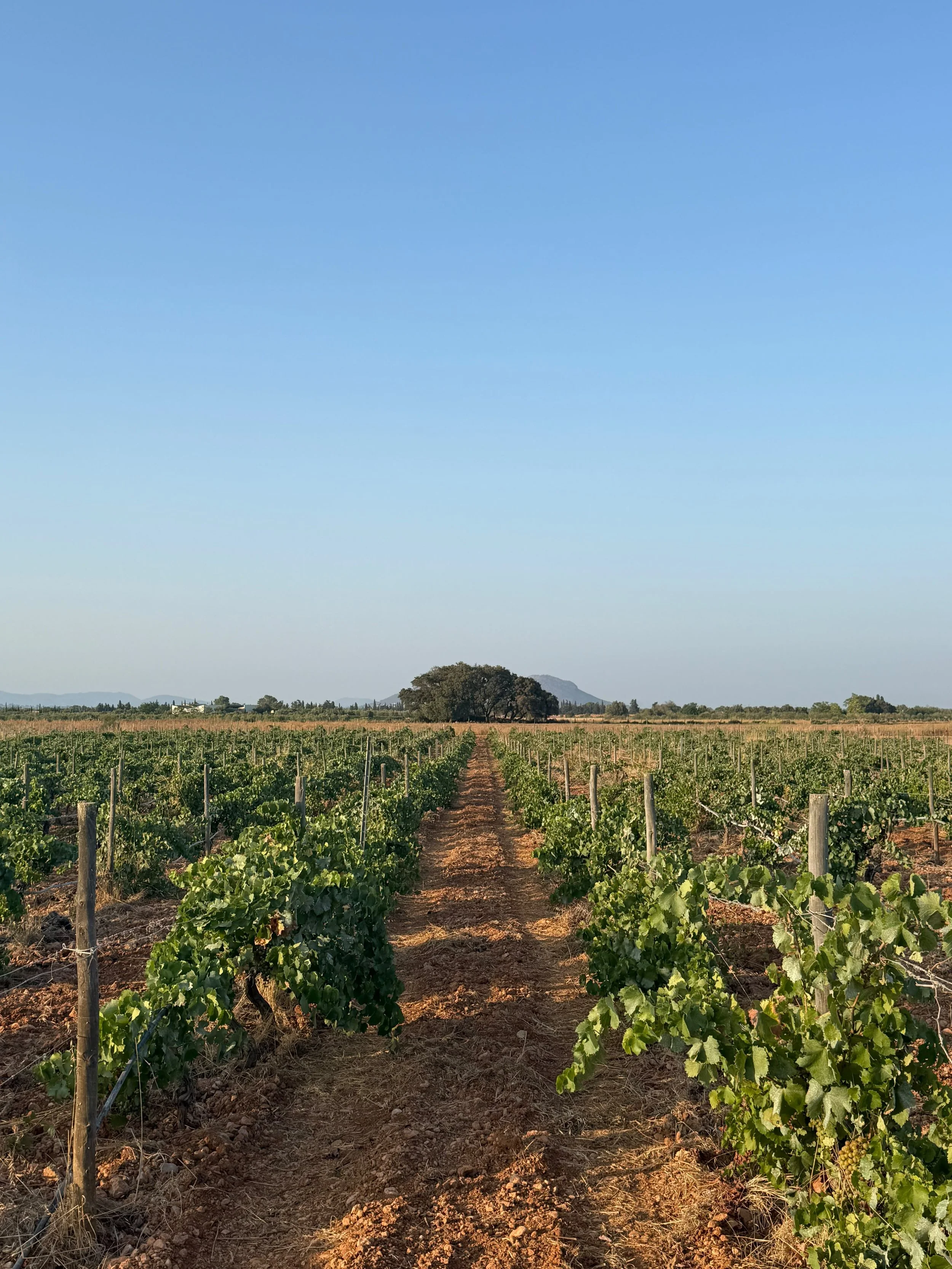
Casi tres hectáreas en Biniagual, un pequeño llogaret de Binissalem, tierra de vino desde hace siglos. La finca se llamaba Cas Brusquer. Tiene un viñedo de 25 años de Manto Negro y Callet, las variedades de la isla, además de un viñedo joven de blancas y un olivar recién plantado. Aquí no hay prisa: lo viejo nos enseña y lo nuevo nos obliga a esperar.
Almost three hectares in Biniagual, a small hamlet in Binissalem, a land of wine for centuries. It was once called Cas Brusquer. Today it holds a 25-year-old vineyard of Manto Negro and Callet, the island's own varieties, alongside young white vines and a newly planted olive grove. There is no hurry here: the old vines teach us, the new ones make us wait.
Nuestro sueño
Our dream
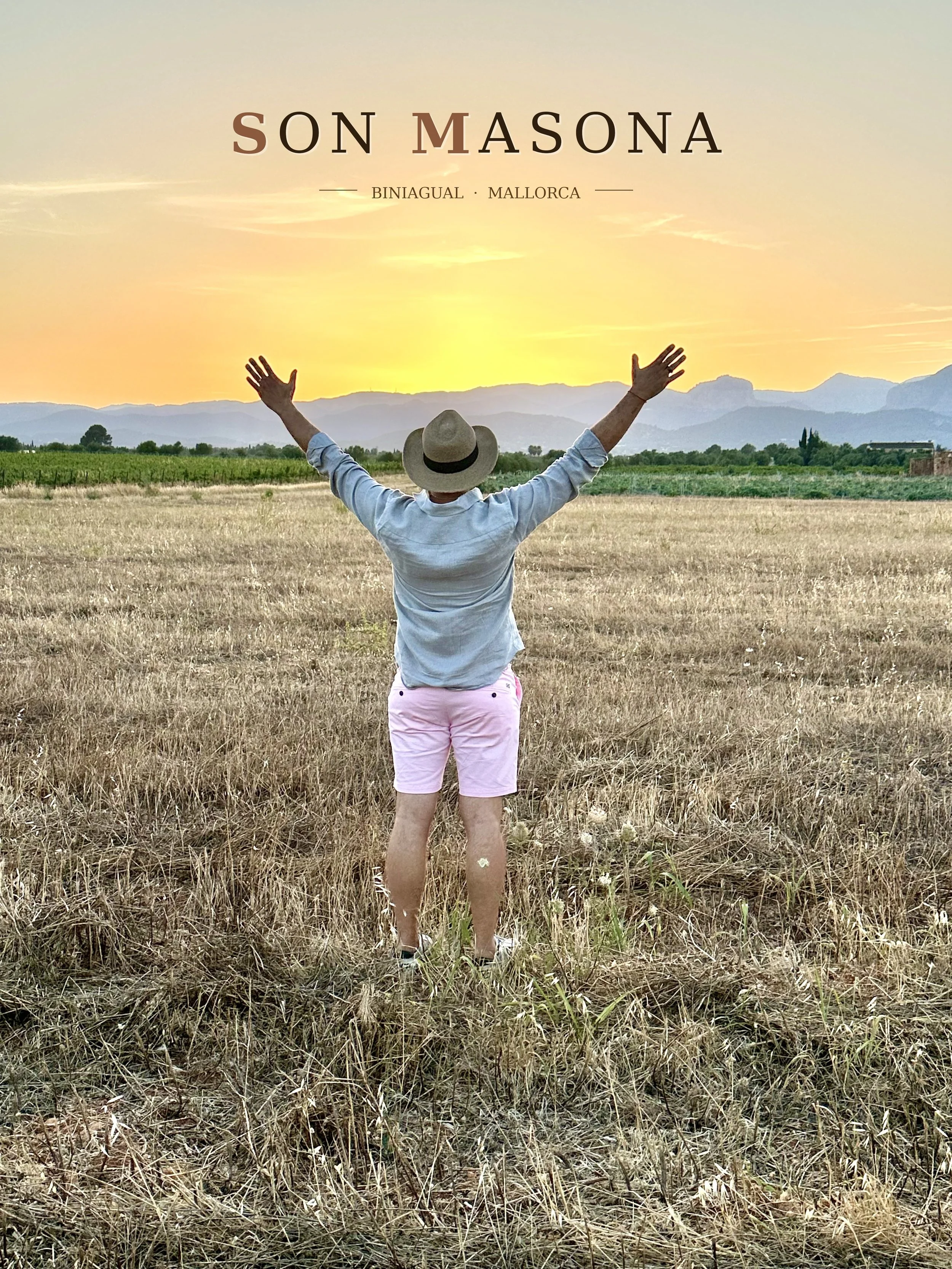
Un lugar donde el tiempo se mide en cosechas, no en relojes.
Soñamos con una tierra donde los hijos vuelven, los nietos crecen y los amigos se quedan a cenar sin avisar. Donde el vino se descorcha porque llegó alguien, no porque haya que celebrar algo. Donde el aceite se prueba con pan recién cortado, sentados a la sombra de un olivo que ya estaba ahí antes que nosotros.
Un lugar hecho de raíces y de futuro. De viñas plantadas para nuestros nietos y de olivos que verán envejecer a nuestros bisnietos. Donde la naturaleza marca los ritmos y nosotros aprendemos, con paciencia, a seguirlos.
Son Masona es el sueño de vivir despacio, en buena compañía, sobre tierra que nos importa. Un pedazo de Mallorca donde el reloj deja de mandar y la vida vuelve a tener el sabor exacto de una tarde larga con vino, aceite y risas.
Eso es lo que estamos plantando.
A place where time is measured in harvests, not clocks.
We dream of a land where children come back, grandchildren grow up and friends stay for dinner without warning. Where wine is opened because someone arrived, not because there is something to celebrate. Where olive oil is tasted with freshly cut bread, in the shade of an olive tree that was here long before us.
A place made of roots and future. Of vines planted for our grandchildren and olive trees that will see our great-grandchildren grow old. Where nature sets the rhythm and we learn, patiently, to follow it.
Son Masona is the dream of living slowly, in good company, on land that matters to us. A corner of Mallorca where the clock stops ruling and life tastes once again like a long afternoon of wine, olive oil and laughter.
That is what we are planting.
La familia
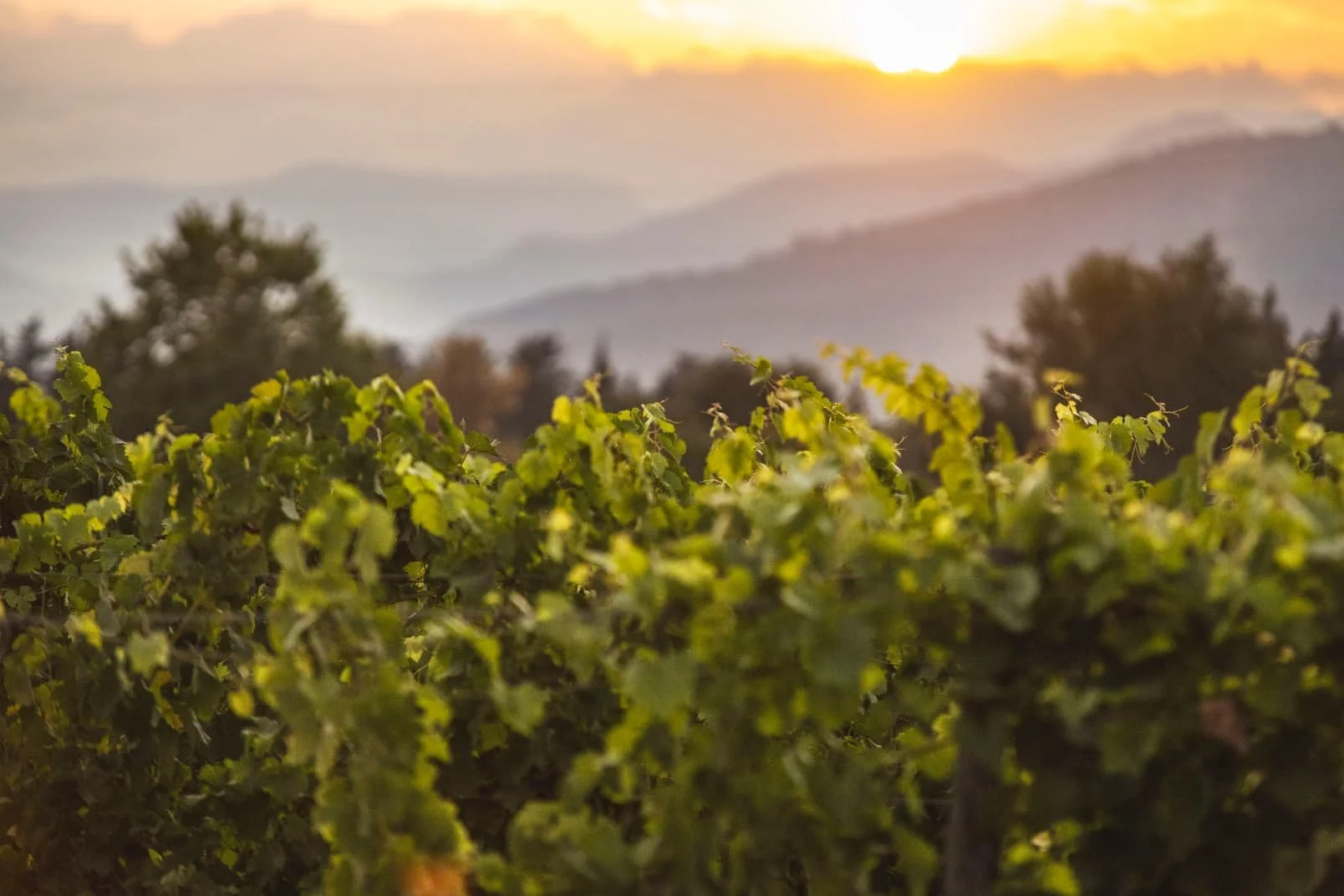
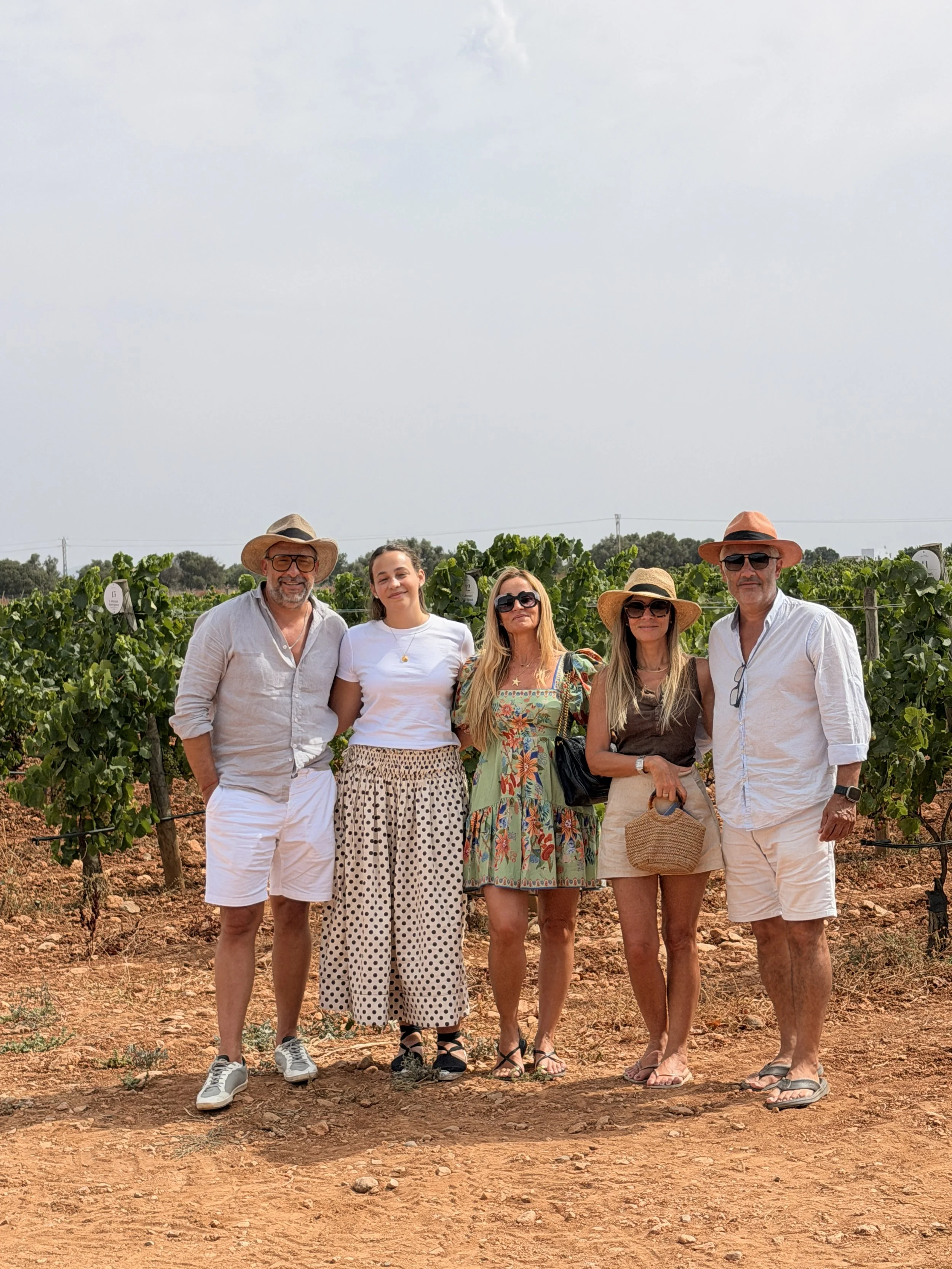
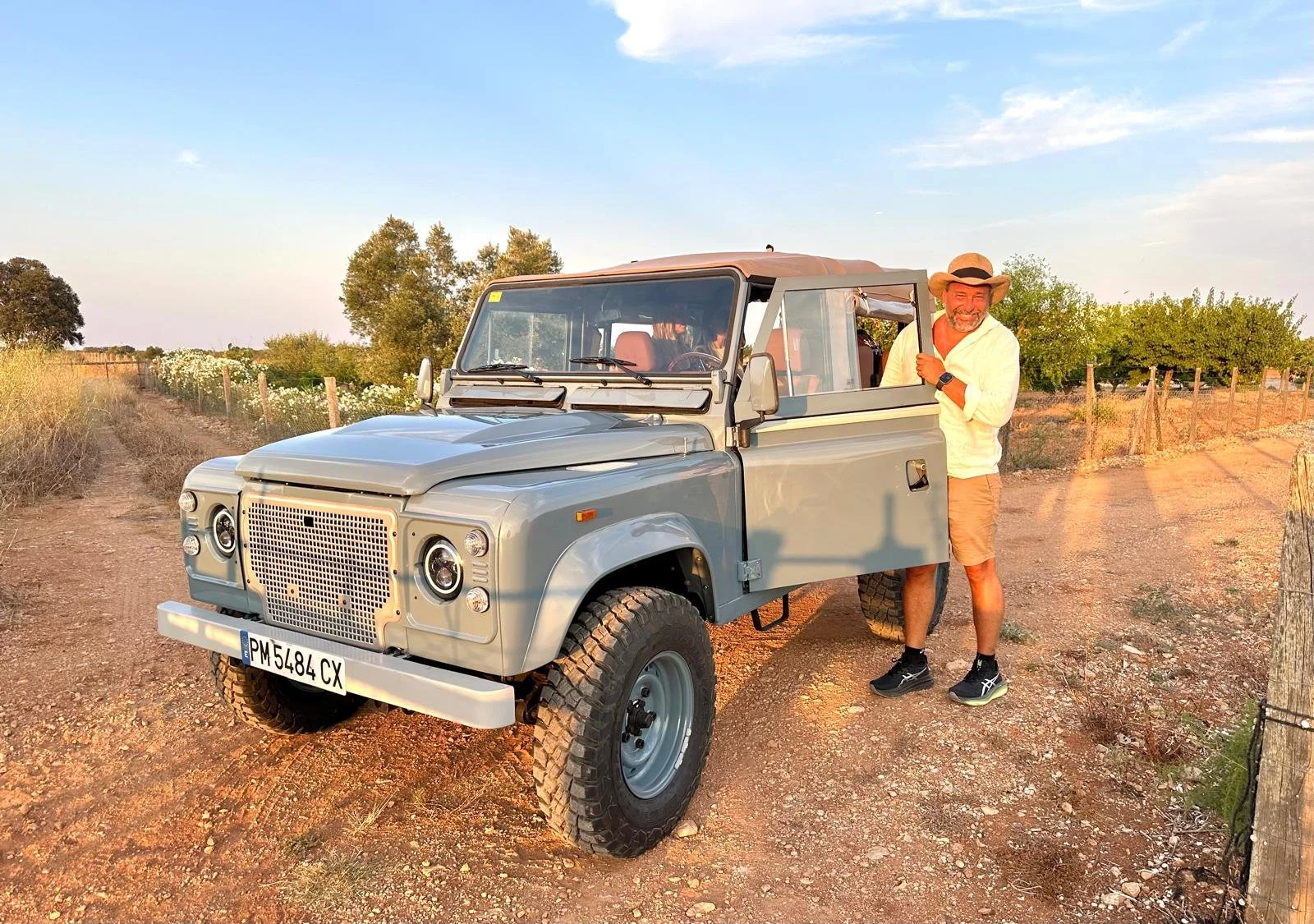
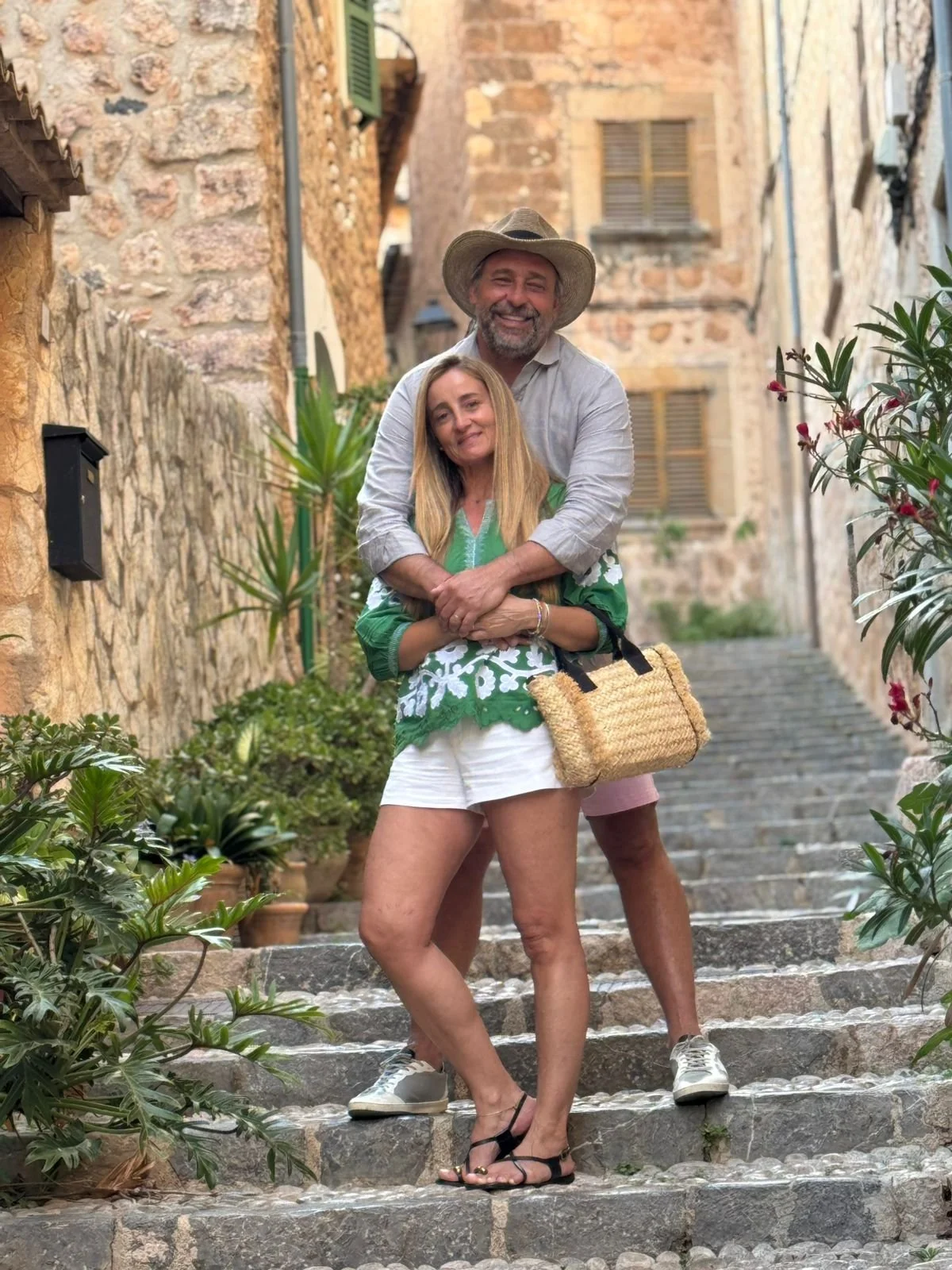
Los tatarabuelos de Santiago eran payeses de Muro. Trabajaban la tierra en el norte de Mallorca. Más de un siglo después, la familia volvió a la isla. El nombre de la finca guarda a los que vienen detrás: MA de Mariana, SO de Sol, NA de Nacho. Son es la forma mallorquina de nombrar una finca. Terra dels Avis, «tierra de los abuelos», es la promesa de cuidarla para quienes vengan después.
Santiago's great-great-grandparents were farmers in Muro, in the north of Mallorca. More than a century later, the family came back. The estate's name holds the next generation: MA for Mariana, SO for Sol, NA for Nacho. Son is the Mallorcan way of naming an estate. Terra dels Avis, "our grandparents' land", is a promise to care for it for those who come next.
Las variedades
Una familia de cuatro uvasA family of four grapes
Son Masona es Terra dels Avis, y nuestras uvas también tienen familia. En la finca crecen cuatro variedades mallorquinas, emparentadas entre sí por siglos de historia en la isla.
Son Masona is Terra dels Avis, the land of our grandparents, and our grapes have a family too. Four Mallorcan varieties grow on the finca, bound together by centuries of island history.
Cuatro uvas, cuatro rincones de la isla · Four grapes, four corners of the island
Toca una uva en el mapa para conocer su historia · Tap a grape on the map to discover its story
Manto Negro
La columna vertebral de Binissalem · The backbone of Binissalem
Español
Es una tinta autóctona de Baleares y la uva más plantada de Mallorca. En la DO Binissalem es la variedad local mayoritaria: casi cuatro de cada diez cepas de la denominación son Manto Negro, repartidas entre Binissalem, Consell, Santa Maria del Camí, Sencelles y Santa Eugènia.
Su primera mención escrita es de 1892, en el informe «Vinos y Vendimias» del ingeniero agrónomo Francisco Satorras. Cobró importancia justo después de la filoxera: se injertaba bien sobre los pies americanos que salvaron los viñedos y producía con generosidad, y eso la convirtió en la uva de los payeses.
En la copa da tintos de color claro, cuerpo ligero y graduación alta. Tiende a oxidarse pronto, y por eso en Mallorca casi siempre se la acompaña con una variedad más estructurada, como el Callet.
Es de las más tardías de la isla: se vendimia a mediados de septiembre. En Son Masona crece en la viña vieja, plantada hace veinticinco años.
English
A native red grape of the Balearic Islands, it is the most planted variety in Mallorca. In the Binissalem DO it is the leading local grape: nearly four in ten vines in the appellation are Manto Negro, spread across Binissalem, Consell, Santa Maria del Camí, Sencelles and Santa Eugènia.
Its first written record dates from 1892, in the report «Vinos y Vendimias» by agronomist Francisco Satorras. It rose to prominence right after phylloxera: it grafted well onto the American rootstocks that saved the vineyards and produced generously, which made it the farmers' grape.
In the glass it gives light-coloured, light-bodied reds with high alcohol. It tends to oxidise early, which is why in Mallorca it is almost always paired with a more structured variety such as Callet.
It is one of the island's latest grapes, harvested in mid-September. At Son Masona it grows in the old vineyard, planted twenty-five years ago.
Callet
La de Felanitx · The grape of Felanitx
Español
Es la tinta autóctona más representativa del Pla i Llevant. Su origen es incierto, pero nació en esa misma zona, alrededor de Felanitx, y las primeras citas escritas son de finales del siglo XIX.
Fue una de las cepas que sobrevivieron a la filoxera. Cuando la plaga arrasó los viñedos de Francia, Mallorca vivió años de bonanza exportando vino al país vecino, y buena parte salía de Felanitx por su puerto, Portocolom.
Es rústica, vigorosa y de alta producción, y prefiere suelos pobres que frenen su vigor. Da vinos de color bajo, graduación y acidez medias y una estructura tánica interesante.
Lo que al Manto Negro le falta, el Callet lo trae. Por eso en Mallorca se ensamblan desde hace más de un siglo, y por eso juntas son ARRELS.
English
It is the most representative native red of the Pla i Llevant. Its origin is uncertain, but it was born in that same area around Felanitx, and the first written references date from the late 19th century.
It was one of the vines that survived phylloxera. When the plague devastated the vineyards of France, Mallorca enjoyed boom years exporting wine there, much of it shipped from Felanitx through its port, Portocolom.
Rustic, vigorous and high-yielding, it prefers poor soils that hold its vigour in check. It gives wines of light colour, moderate alcohol and acidity, and an interesting tannic structure.
What Manto Negro lacks, Callet brings. That is why Mallorca has blended them for over a century, and why together they are ARRELS.
Giró Ros
La que casi se pierde · The one that was almost lost
Español
Es de las variedades más antiguas que se cultivan en Mallorca, anterior a la filoxera. La primera mención documentada es del siglo XVII, en un archivo del convento de los agustinos de Felanitx.
Su nombre lo dice todo: acumula tanto azúcar que la uva llega a pasificarse en la planta, y ros es rubio en mallorquín. Hasta los años ochenta en la isla no se elaboraban vinos blancos: se hacían claretes, y el Giró Ros servía para subirles el grado. También se comía como uva de mesa, por lo dulce.
A comienzos de los setenta se hizo el primer catálogo de variedades protegidas y quedó afuera por escasa. Difícil de cultivar y de rendimientos desiguales, estuvo a punto de extinguirse.
La salvaron unas decenas de cepas que un viticultor de Felanitx conservaba en una fila de su viña, porque su padre le había advertido de la calidad de esa uva. Junto a un bodeguero la vinificaron por primera vez en 1993, en Son Nadal. En 2011 se autorizó oficialmente, y hoy vuelve a crecer en toda la isla.
En la viña nueva de Son Masona plantamos 1.300 cepas.
English
One of the oldest varieties grown in Mallorca, it predates phylloxera. Its first documented mention dates from the 17th century, in an archive of the Augustinian convent of Felanitx.
Its name says it all: it gathers so much sugar that the grapes begin to raisin on the vine, and ros means blond in Mallorquí. Until the 1980s no white wines were made on the island, only rosés, and Giró Ros was used to raise their strength. It was also eaten as a table grape for its sweetness.
When the first catalogue of protected varieties was drawn up in the early 1970s, it was left out for being too scarce. Hard to grow and with uneven yields, it came close to extinction.
It survived thanks to a few dozen vines that a Felanitx grower kept in one row of his vineyard, because his father had told him how good that grape was. Together with a winemaker he vinified it for the first time in 1993, at Son Nadal. It was officially authorised in 2011, and today it is growing again across the island.
We have planted 1,300 vines in Son Masona's new vineyard.
Malvasía
La que llegó por mar · The one that came by sea
Español
Nació en Grecia o en Asia Menor, y en la Edad Media fue uno de los tres grandes vinos que Grecia exportaba. Su nombre sería una deformación italiana de Monemvasia, el puerto del Peloponeso desde donde partía.
Viajó hacia el oeste por el Mediterráneo, de puerto en puerto: Nápoles, Sitges, Banyalbufar. En Mallorca encontró casa en las terrazas que los árabes construyeron en el siglo XI sobre el mar; el propio nombre de Banyalbufar viene del árabe y significa «viñedos junto al mar».
En el siglo XVI la malvasía mallorquina se exportaba sobre todo a la corte de Aragón. En 1891 la filoxera acabó con ella y las terrazas quedaron abandonadas durante décadas.
Su regreso empezó en 1999, con un proyecto del Govern balear que recuperó la variedad. Hoy vuelve a plantarse en la isla, y en la viña nueva de Son Masona tenemos 550 cepas. Con el Giró Ros darán vida a FLORS.
English
Born in Greece or Asia Minor, in the Middle Ages it was one of the three great wines Greece exported. Its name is thought to be an Italian corruption of Monemvasia, the Peloponnese port it sailed from.
It travelled west across the Mediterranean, port by port: Naples, Sitges, Banyalbufar. In Mallorca it found a home on the terraces the Arabs built above the sea in the 11th century; the name Banyalbufar itself comes from Arabic and means «vineyards by the sea».
In the 16th century Mallorcan malvasia was exported mainly to the court of Aragon. In 1891 phylloxera wiped it out, and the terraces were abandoned for decades.
Its return began in 1999, with a Balearic government project that recovered the variety. Today it is being replanted on the island, and we have 550 vines in Son Masona's new vineyard. Together with Giró Ros, they will give life to FLORS.
El árbol de familia
Una familia mallorquina · A Mallorcan family
Español
Durante años, el origen de las tintas de Mallorca fue un misterio. Una pieza clave apareció en Cas Concos, una pedanía de Felanitx: una cepa casi olvidada que primero se llamó «callet de Cas Concos» y hoy se conoce como Callet Negrella.
Los estudios genéticos del IRFAP, el instituto agrario de Baleares, señalan como probables padres del Manto Negro a la Callet Negrella y la Sabater, dos variedades mallorquinas casi olvidadas. El origen del Callet, nacido en el Pla i Llevant, todavía guarda sus secretos.
Son historias que la isla guardó durante siglos y que todavía se están estudiando. Por eso en Son Masona plantamos solo uvas de Mallorca: cuidarlas es cuidar esa memoria.
En la Terra dels Avis, también las uvas tienen familia.
English
For years, the origin of Mallorca's red grapes was a mystery. A key piece turned up in Cas Concos, a hamlet of Felanitx: a nearly forgotten vine first called «callet de Cas Concos», known today as Callet Negrella.
Genetic studies by IRFAP, the Balearic agricultural institute, point to Callet Negrella and Sabater, two nearly forgotten Mallorcan varieties, as the probable parents of Manto Negro. The origins of Callet, born in the Pla i Llevant, still keep their secrets.
These are stories the island has kept for centuries, and they are still being studied. That is why at Son Masona we plant only Mallorcan grapes: caring for them is caring for that memory.
In the land of our grandparents, the grapes have a family too.
El vaso mallorquín
La forma de los avis · The way of our grandparents
Español
Antes de los alambres, antes de las máquinas, la viña de Mallorca crecía sola. Baja, abierta como una copa, cada cepa de pie en la tierra roja, sin más compañía que un palo de madera clavado a su lado. Los payeses lo llamaban politxó.
Esa forma tiene más de dos mil años. La usaban los griegos y la heredaron los romanos, que la llevaron por todo el Mediterráneo. Cuando Quinto Cecilio Metelo llegó a Mallorca hacia el año 123 antes de Cristo, la viña echó raíces en la isla, y así, en vaso, se cultivó durante siglos.
No era un capricho: era sabiduría. En una isla de veranos largos y lluvias escasas, la cepa en vaso se defiende sola. Sus hojas dan sombra a los racimos, no necesita riego y se conforma con la lluvia que mande el cielo. Es la viña del secano, la de los que no tenían agua para regalar.
A fines del siglo XIX, Mallorca era un mar de viñas: casi treinta mil hectáreas. La filoxera había arrasado Francia, y los barcos salían cargados de vino mallorquín hacia los puertos franceses. Hasta que en 1891 la plaga cruzó el mar. Las viñas murieron, muchos payeses las arrancaron para plantar almendros, y un mundo entero pareció terminarse.
Pero la viña volvió. Se replantó sobre pies americanos, y en buena parte otra vez en vaso. Así siguió hasta hace pocas décadas, cuando llegaron la espaldera, los alambres y el riego. Las viñas nuevas se pusieron en fila, y el vaso quedó en las viñas viejas y en la memoria de los mayores.
Hoy vuelve. Cada vez más viticultores de la isla recuperan la forma de siempre, porque entienden lo que sabían los avis: con veranos cada vez más secos, la cepa que se cuida sola es la que resiste.
En Son Masona queremos ser parte de ese regreso. Estamos estudiando con nuestro agrónomo devolver la viña vieja a su forma original, para que las cepas de ARRELS vuelvan a crecer como las cultivaban los payeses de Muro. Terra dels Avis no es solo un nombre: es también una manera de cuidar la tierra.
English
Before wires, before machines, Mallorca's vines grew on their own. Low, open like a cup, each one standing alone in the red earth, with nothing beside it but a wooden stake driven into the ground. The farmers called it a politxó.
This way of growing vines is more than two thousand years old. The Greeks used it and the Romans inherited it, carrying it across the Mediterranean. When Quintus Caecilius Metellus reached Mallorca around 123 BC, the vine took root on the island, and for centuries it was grown just like this, as a bush vine.
It was not a whim; it was wisdom. On an island of long summers and scarce rain, the bush vine looks after itself. Its leaves shade the grapes, it needs no irrigation, and it makes do with whatever rain the sky sends. It is the vine of dry farming, the vine of those who had no water to spare.
By the end of the 19th century, Mallorca was a sea of vines: nearly thirty thousand hectares. Phylloxera had devastated France, and ships sailed loaded with Mallorcan wine for French ports. Until, in 1891, the plague crossed the sea. The vineyards died, many farmers pulled them out to plant almond trees, and a whole world seemed to come to an end.
But the vine came back. It was replanted on American rootstock, and much of it once again as bush vines. So it remained until a few decades ago, when trellises, wires and irrigation arrived. New vineyards were set in neat rows, and the bush vine lived on in old vineyards and in the memory of the elders.
Today it is returning. More and more growers on the island are going back to the old way, because they understand what our grandparents knew: as summers grow drier, the vine that cares for itself is the one that endures.
At Son Masona we want to be part of that return. Together with our agronomist, we are studying how to bring our old vineyard back to its original form, so that the vines of ARRELS grow once more the way the farmers of Muro grew them. Terra dels Avis is not just a name; it is also a way of caring for the land.
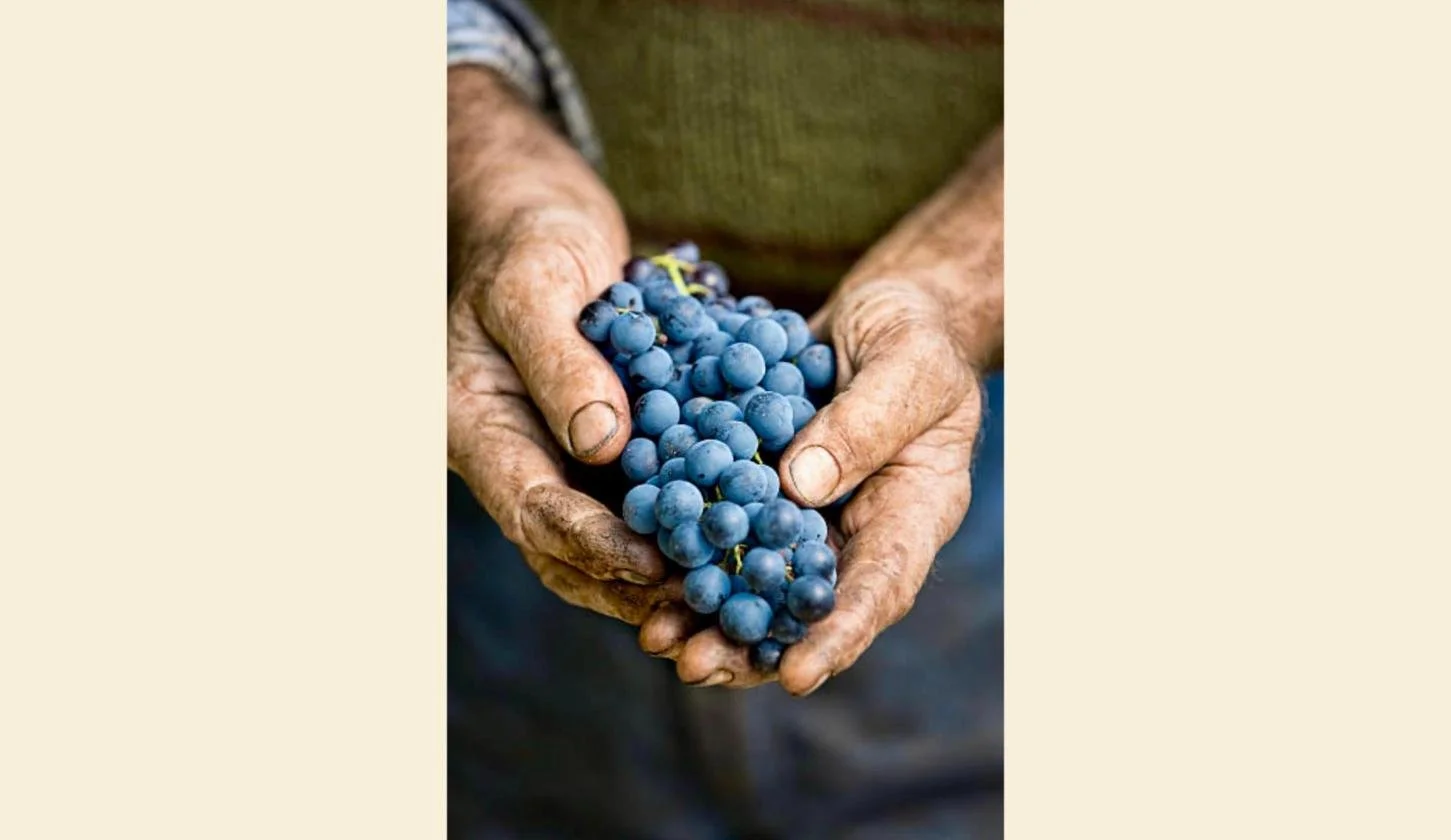
Cada racimo guarda el trabajo de los que vinieron antes.
Every cluster holds the work of those who came before.
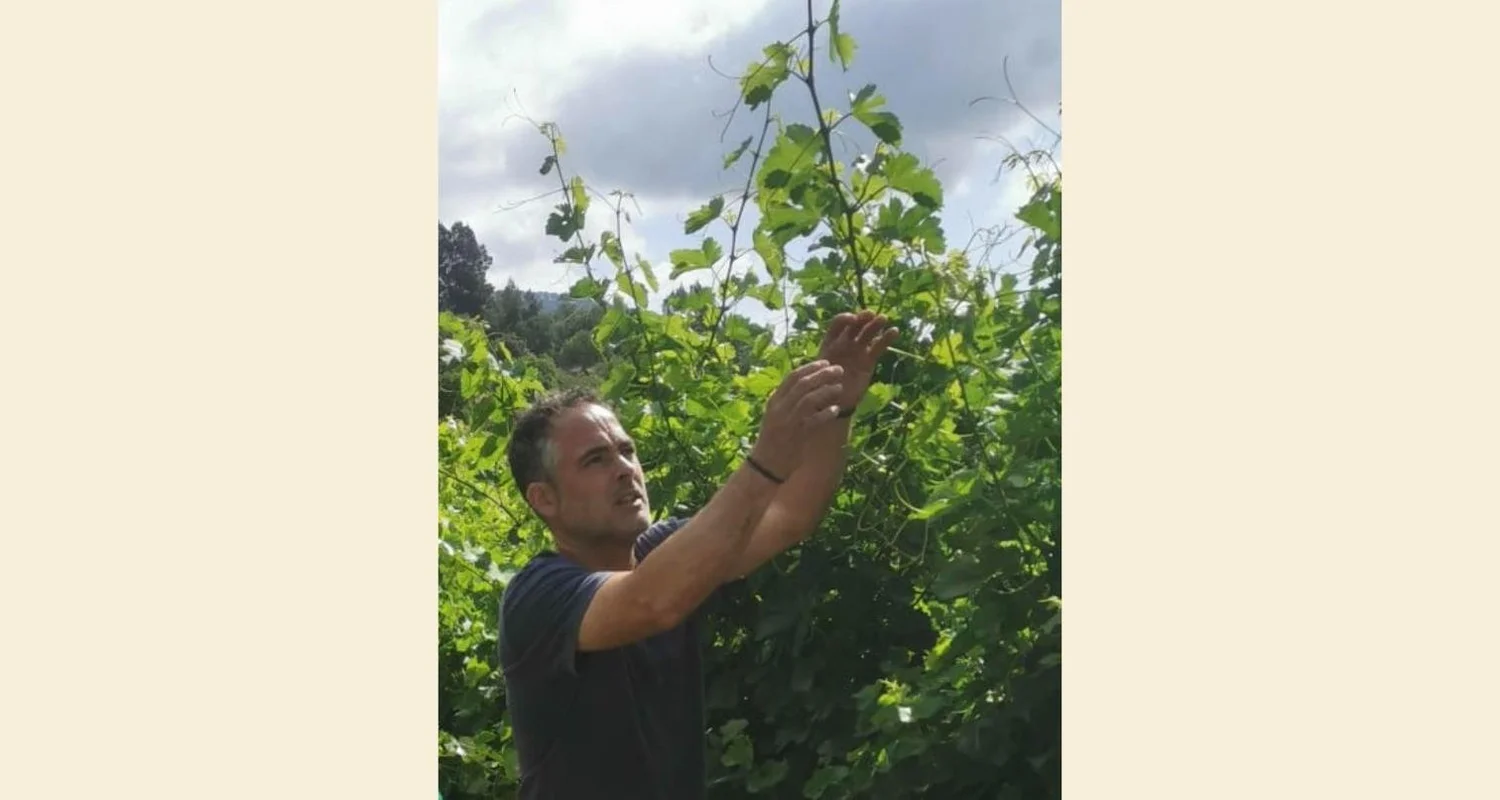
Nuestras viñas, de la mano de · Our vines, in the hands of
Sergio Navarro
Agrónomo y enólogo · Agronomist and winemaker
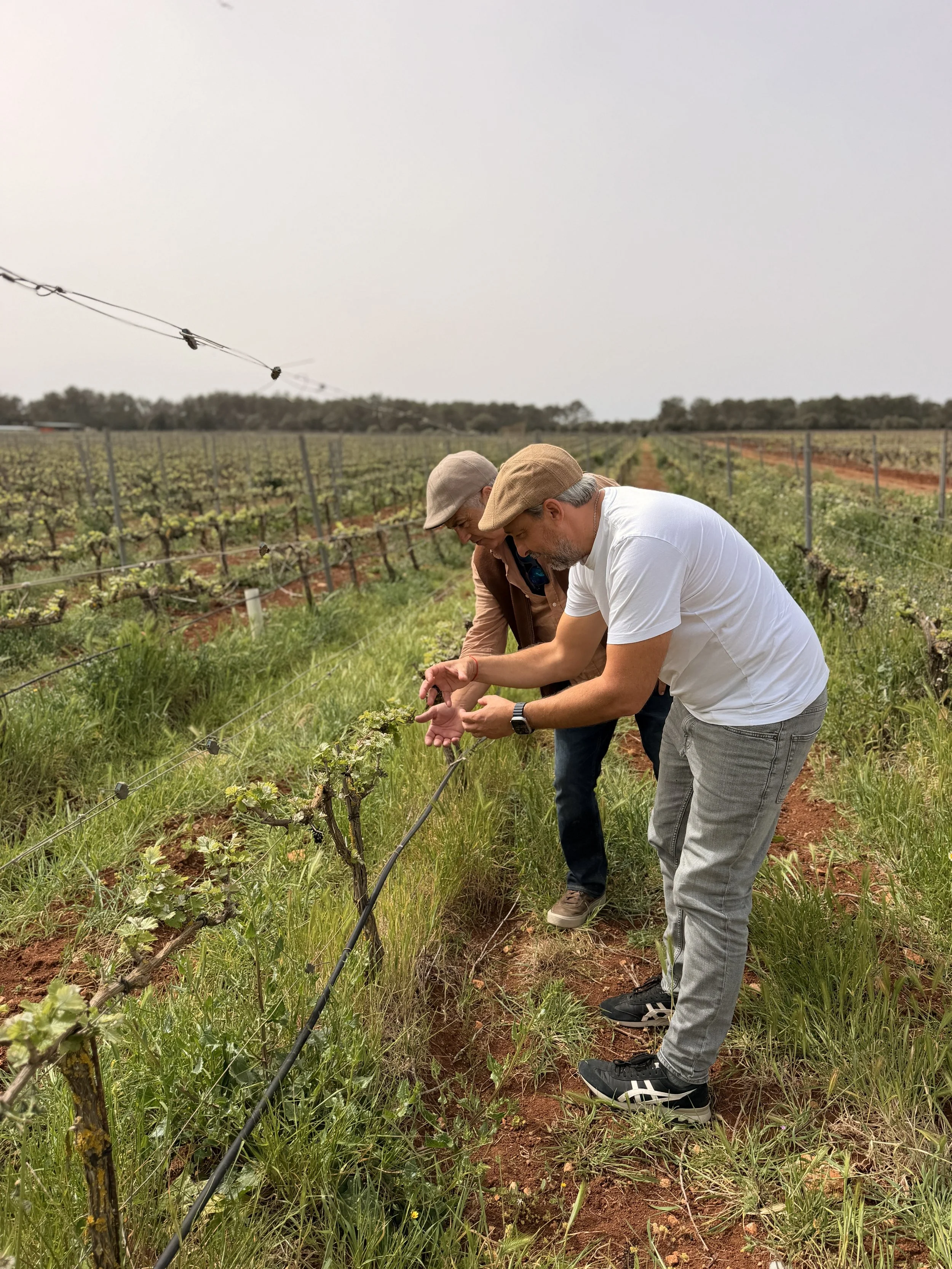
Ingeniero agrónomo y licenciado en Viticultura y Enología por la Universitat Politècnica de València, con estancias en el Loira y en Burdeos. Lleva más de veinte años en Mallorca, asesorando en viticultura y elaboración de vinos a distintos proyectos de la isla. En Son Masona acompaña el cuidado de nuestras viñas.
An agricultural engineer with a degree in Viticulture and Oenology from the Universitat Politècnica de València, with time spent in the Loire and Bordeaux. For more than twenty years he has worked in Mallorca, advising several projects across the island on viticulture and winemaking. At Son Masona, he helps us care for our vines.
Los vinos
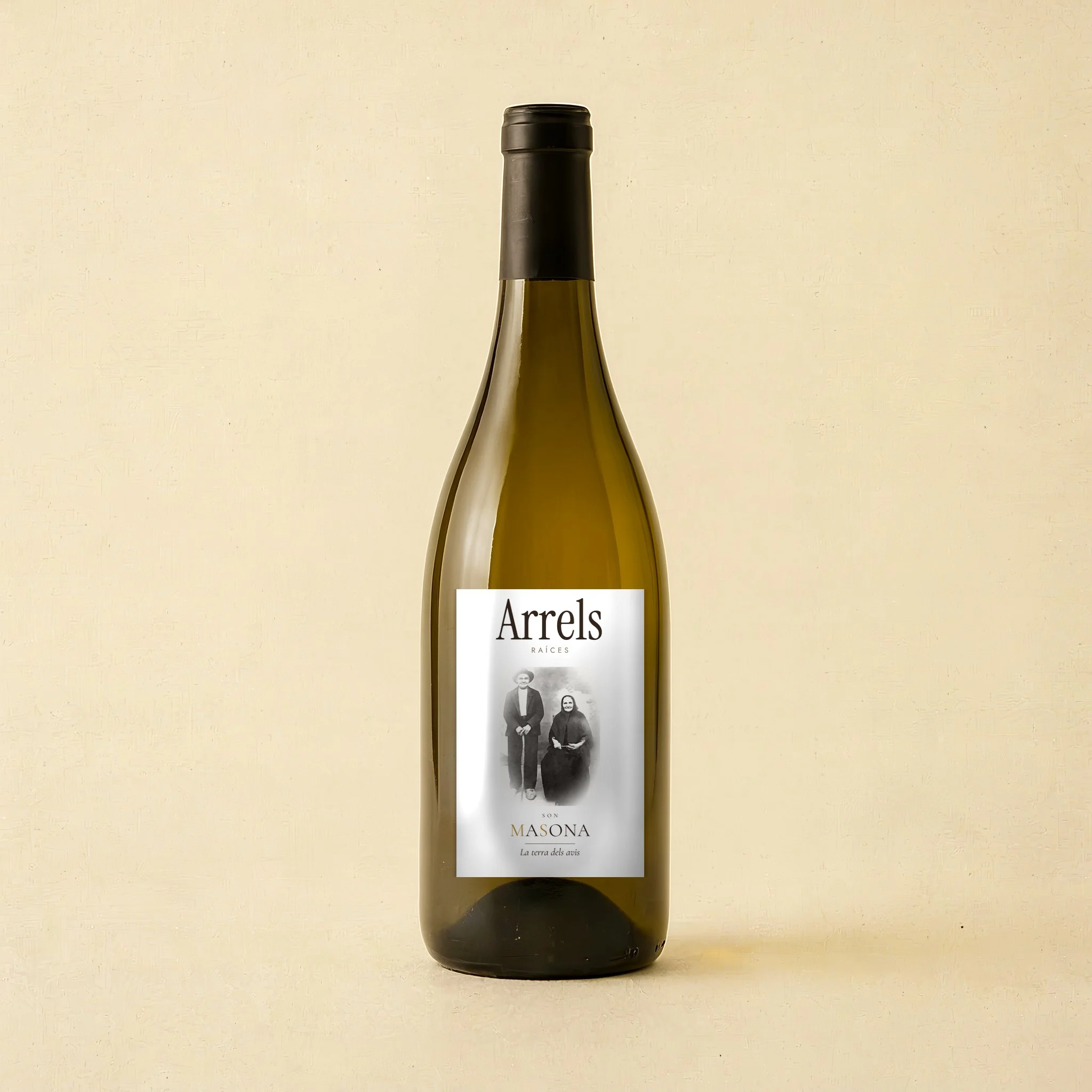
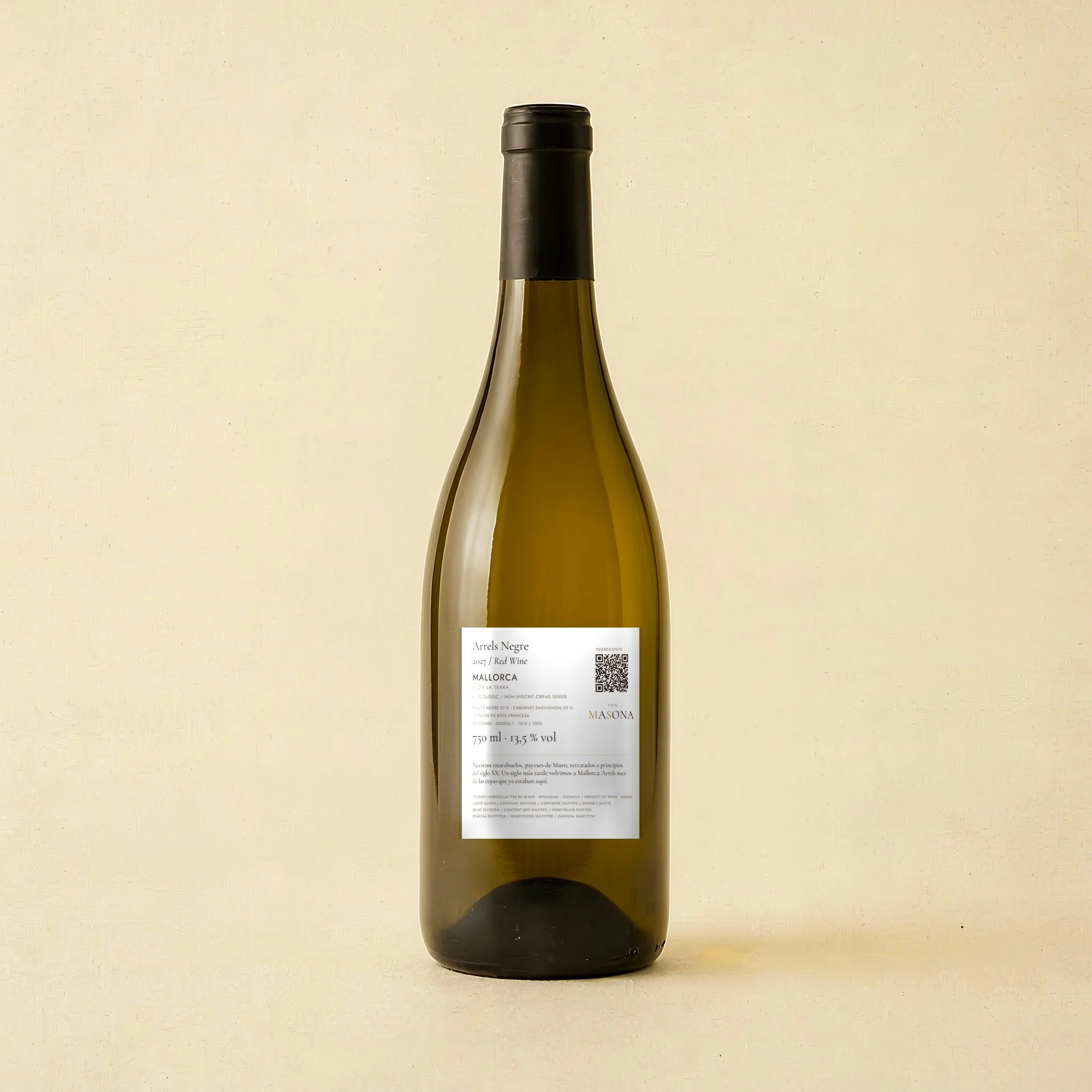
Arrels — «raíces» en mallorquín. Tinto de Manto Negro y Callet de nuestras cepas de 25 años. Primera vendimia en 2027; saldrá a finales de 2029, después de la crianza que necesita.
Arrels means "roots" in Mallorcan. A red from our 25-year-old Manto Negro and Callet vines. First harvest in 2027, release in late 2029, after the time it needs.
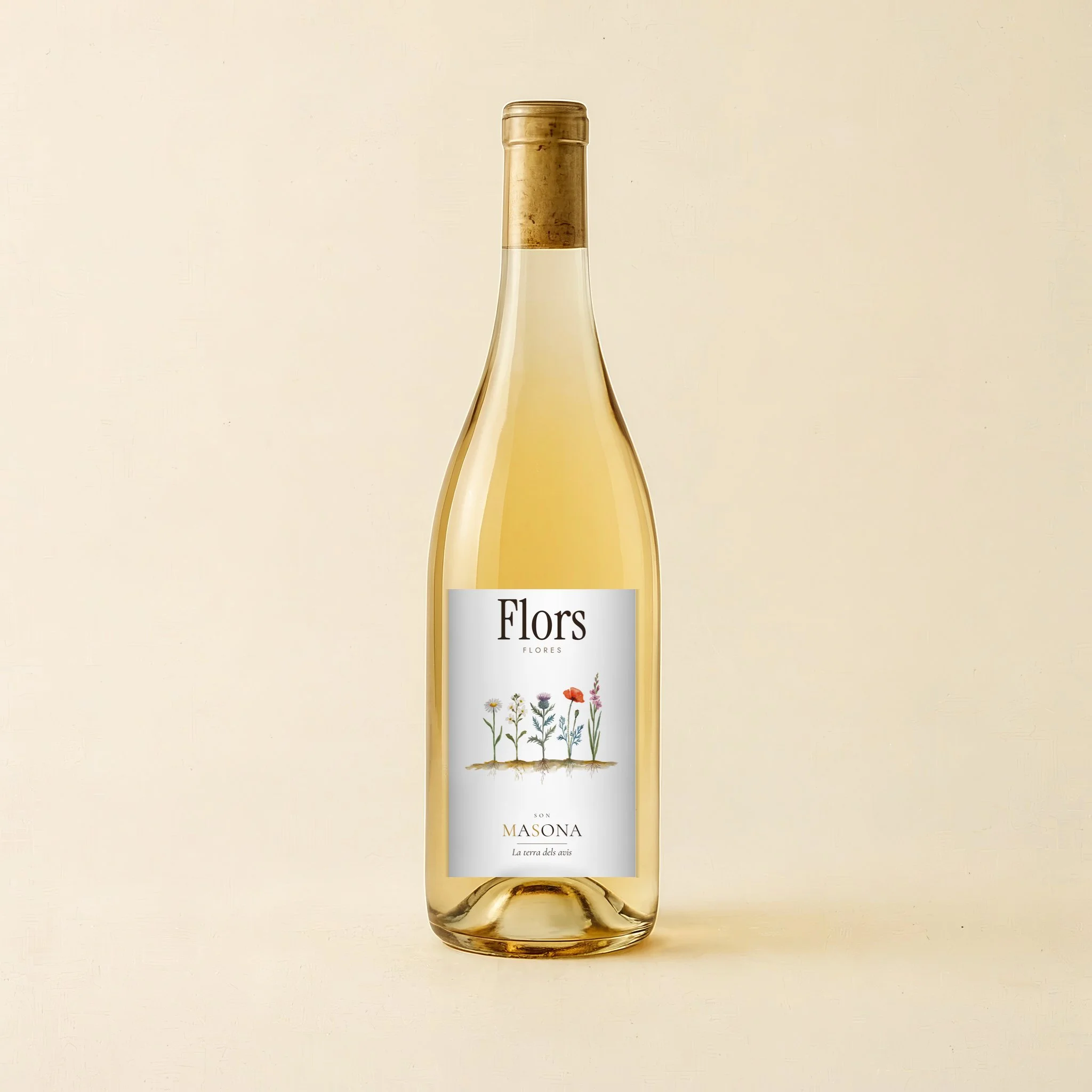
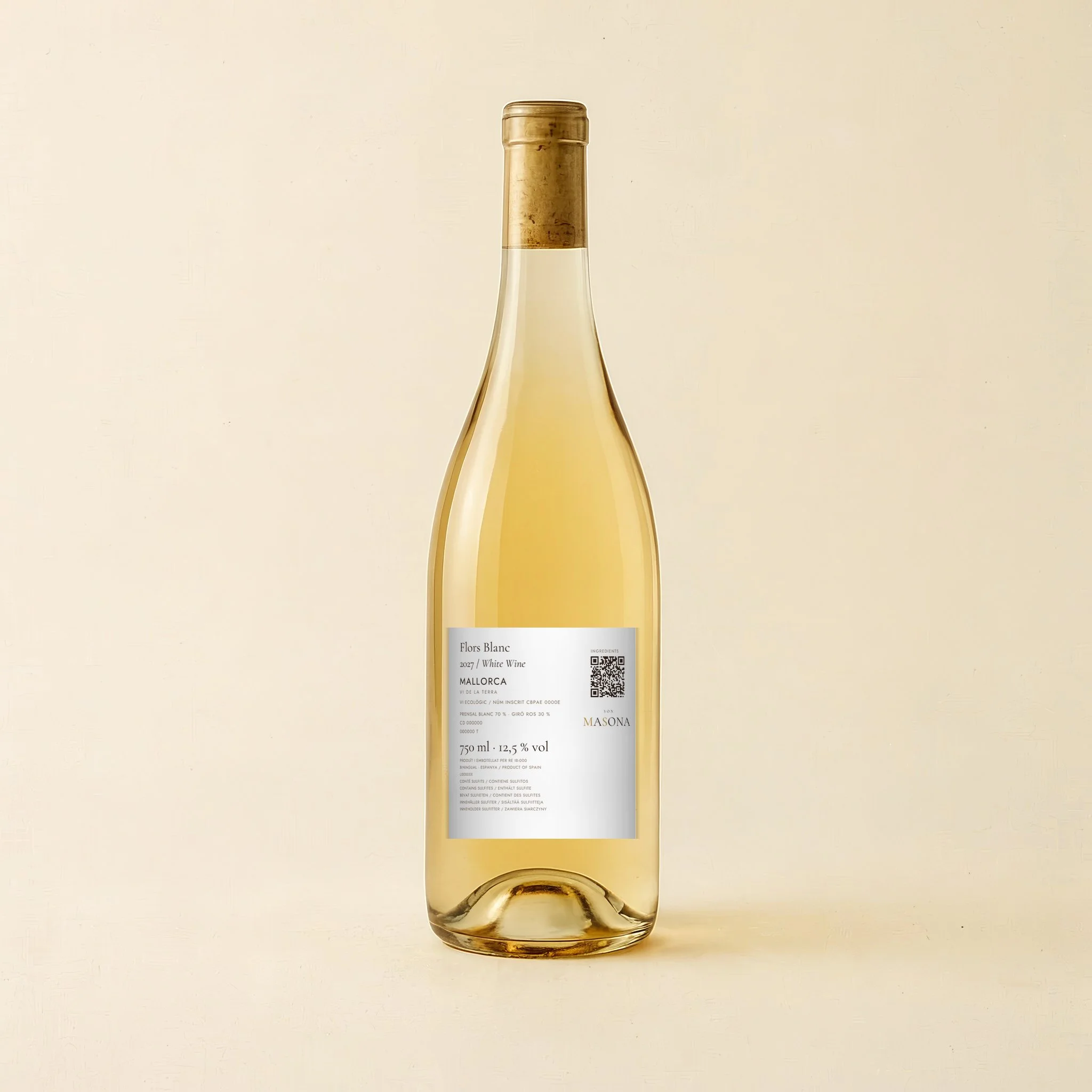
Flors — «flores» en mallorquín. El blanco que nacerá de nuestro viñedo joven. Llegará cuando las viñas estén listas.
Flors means "flowers" in Mallorcan. The white from our young vineyard, when the vines are ready.
Ambos serán Vi de la Terra Mallorca. Por ahora no hay vino a la venta: preferimos decirlo claro.
Both will be Vi de la Terra Mallorca. There is no wine for sale yet, and we would rather say so plainly.
El aceite
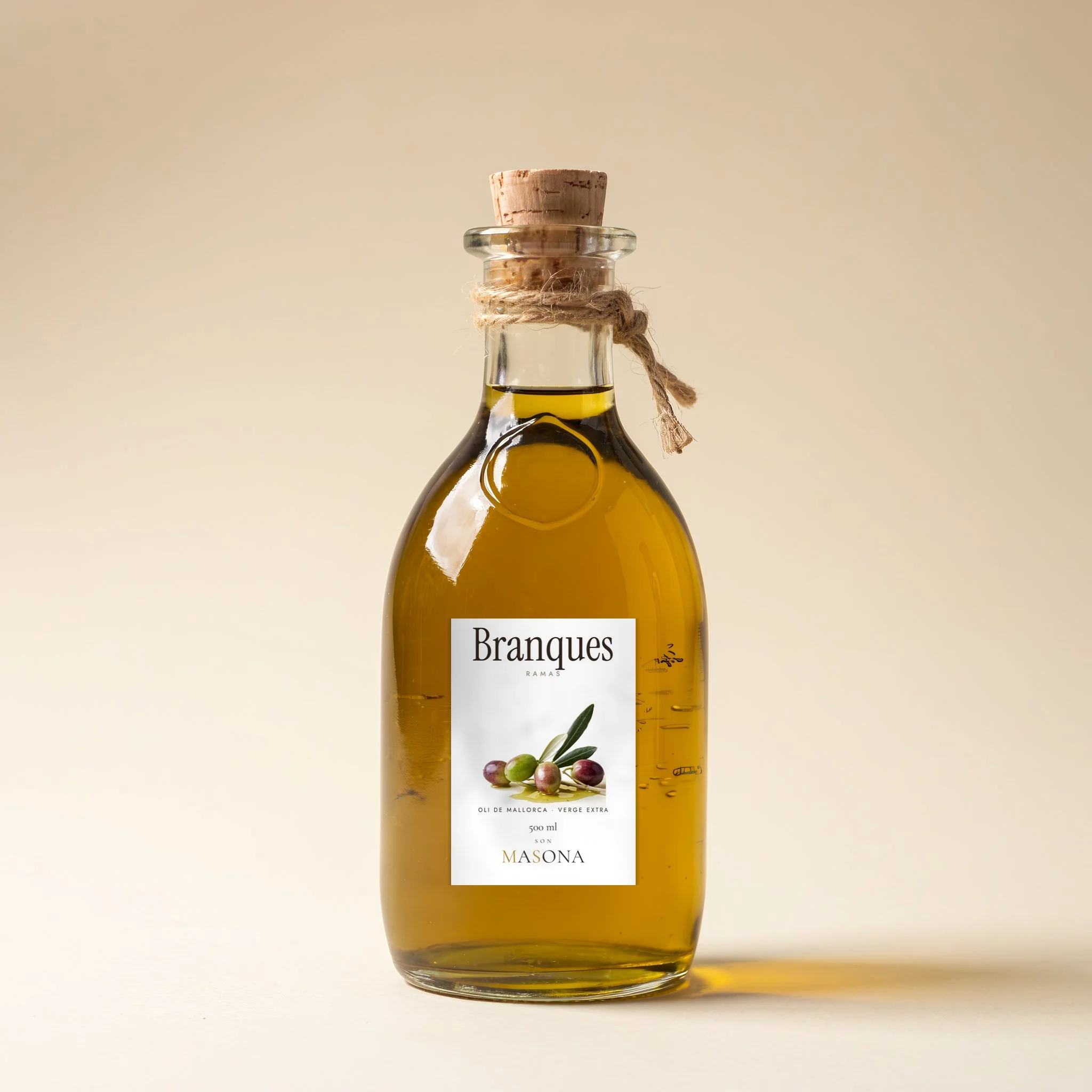
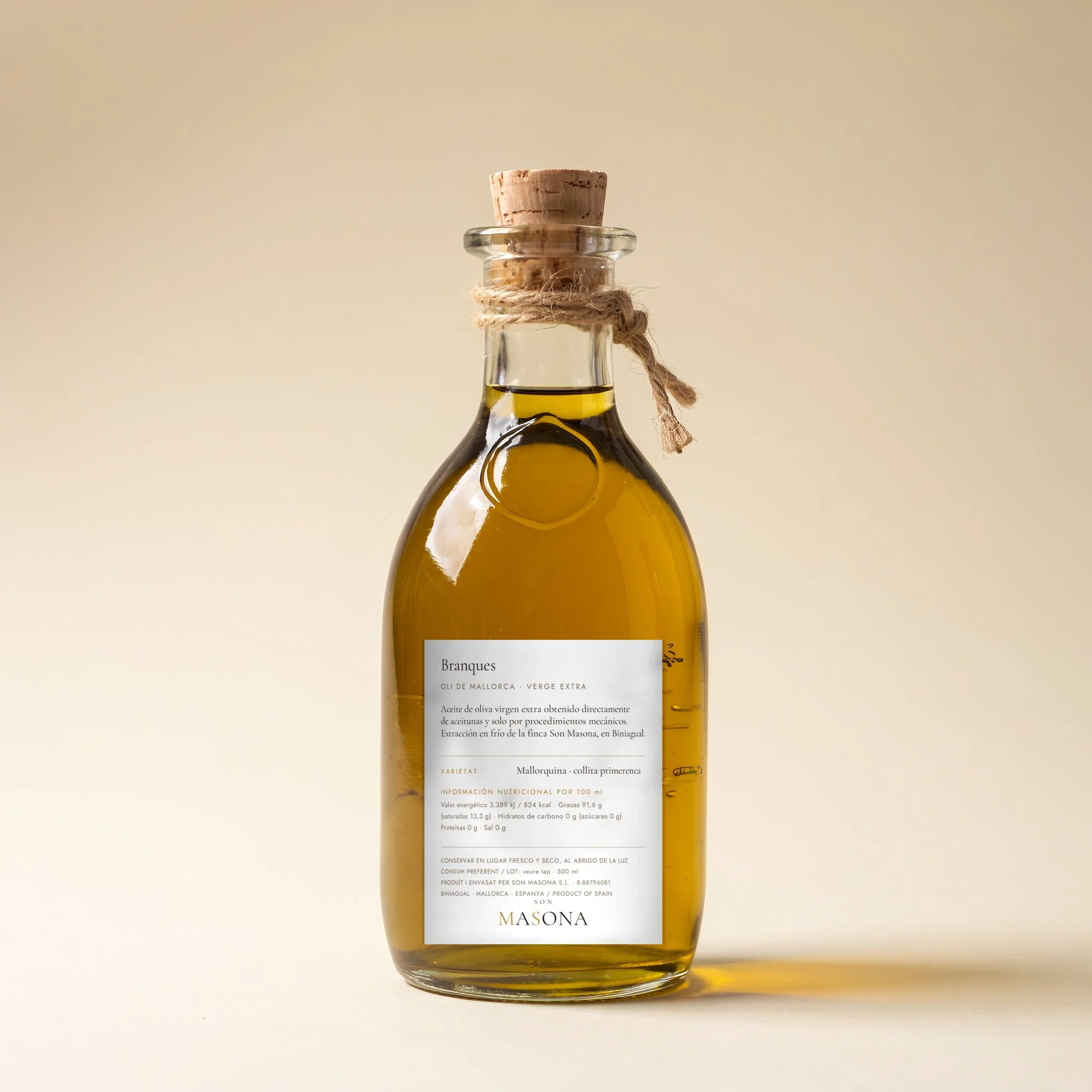
Aceite de oliva virgen extra de nuestro olivar joven. Irá en una botella pensada para quedarse en la mesa y no para esconderse en la despensa. Sale del mismo suelo que el vino y cuenta la misma historia.
Extra virgin olive oil from our young olive grove, in a bottle meant to live on the table, not in the pantry. Same soil as the wine, same story.
Escríbenos
Write to us
Todavía no recibimos visitas, pero nos encanta leer a quien se acerca al proyecto: prensa, distribución o simple curiosidad.
We don't host visits yet, but we love hearing from anyone drawn to the project: press, trade or simple curiosity.
© 2026 Son Masona · Terra dels Avis